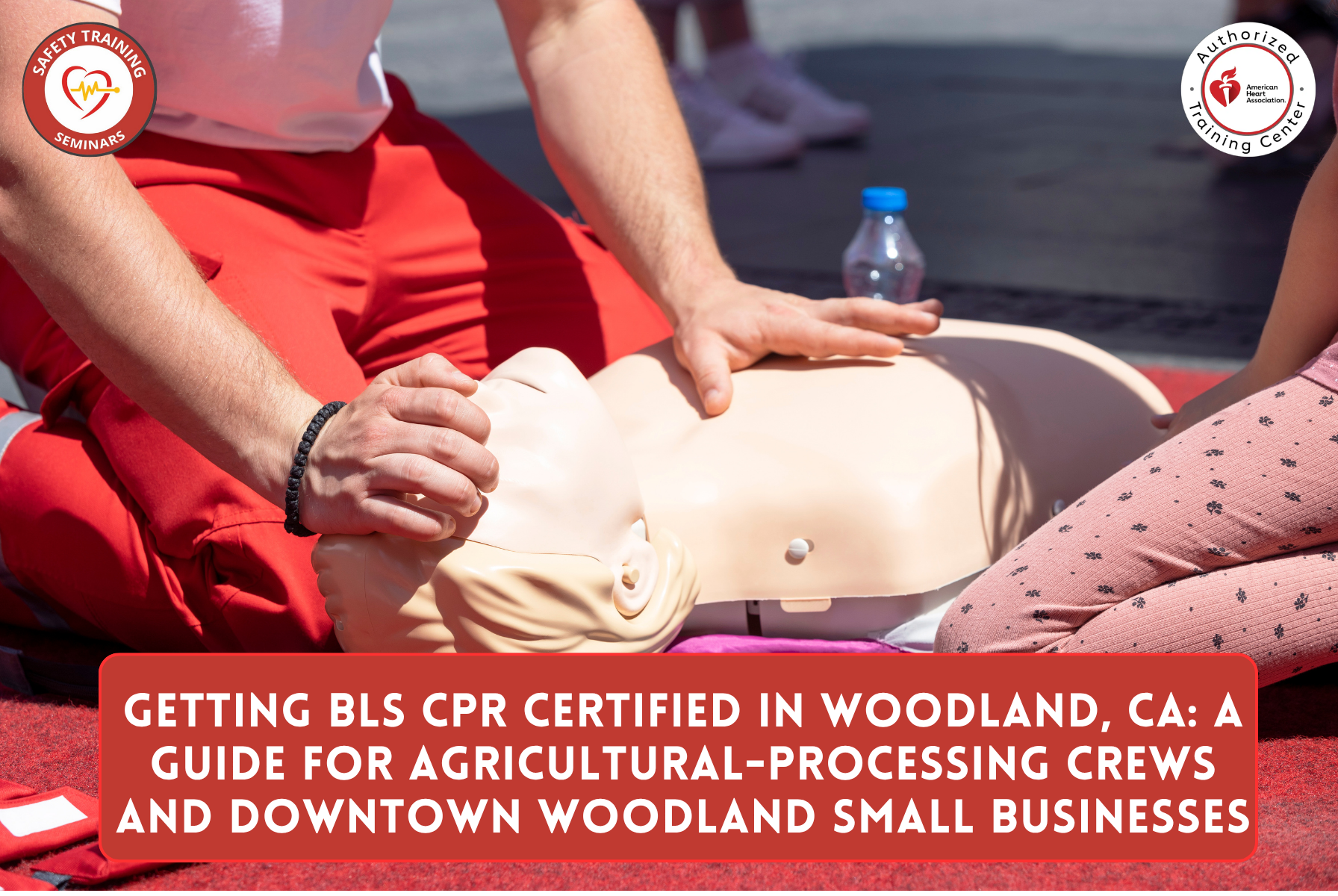
A healthcare worker, a food-processing employee, and someone working in a downtown Woodland shop may all benefit from emergency-response training, but they do not necessarily need the same certification. For most non-healthcare agricultural-processing crews and small-business employees in Woodland, CA, workplace First Aid and CPR/AED training is generally the more relevant place to start. A BLS CPR Certification Course is primarily designed for healthcare professionals and other trained responders, while ACLS and PALS address advanced clinical emergencies.
The right choice ultimately depends on the employee’s duties, workplace hazards, employer policy, and any applicable regulatory requirements. OSHA requires employers to consider workplace first-aid needs and access to medical care rather than treating one course as appropriate for every business.
Key Takeaway: A Woodland retail shop, office, warehouse, or agricultural-processing team should usually evaluate First Aid plus CPR/AED training first if employees are not healthcare professionals. BLS becomes more appropriate when a job specifically requires healthcare-level resuscitation skills.
Start With the Workplace, Not the Most Advanced Course
One of the easiest mistakes an employer can make is assuming that a more advanced-sounding certification must provide the best workplace preparation.
BLS, ACLS, and PALS have specific healthcare purposes. A typical workplace team may instead need skills for recognizing an emergency, providing first aid, performing CPR, and using an automated external defibrillator while professional emergency services are being contacted.
The American Heart Association describes Heartsaver First Aid CPR AED as training for people with little or no medical background who need first aid, CPR, and AED skills for workplace, regulatory, or general preparedness purposes.
That description fits many non-clinical workplaces more closely than ACLS or PALS.
Before choosing any course, Woodland employers should ask:
- What injuries or medical events could reasonably occur at this workplace?
- Are employees healthcare professionals or lay responders?
- Does a contract, employer policy, regulator, or licensing organization specify a course?
- Does the team need CPR only, or CPR plus first aid?
- Will employees be expected to use an AED?
- Are there industry-specific safety requirements that must also be addressed?
The answers are more useful than simply choosing the certification with the longest name.
Agricultural-Processing Crews Often Need Broader First-Aid Preparation
Agricultural and processing workplaces can differ considerably from an office or storefront. Employees may work around equipment, tools, loading areas, production processes, outdoor conditions, or other job-specific hazards.
That makes a workplace assessment especially important. OSHA states that employers are responsible for evaluating workplace first-aid needs and making adequate first-aid resources available as required by the applicable standard. OSHA guidance also emphasizes matching first-aid preparation to the types of injuries or illnesses that could occur at a particular workplace.
For a non-healthcare processing crew, First Aid CPR AED training may therefore provide a more appropriate starting point than BLS alone because it combines response to sudden cardiac arrest with broader first-aid situations.
That does not mean every agricultural business has identical requirements. Employers should review the hazards of their own operation and confirm any California workplace-safety obligations that apply to their industry.
Teams based in or around Woodland can review the Woodland CPR and life-support course options while determining which training matches their needs.
Downtown Woodland Small Businesses May Have Different Priorities
A downtown restaurant, retail shop, professional office, fitness business, or other small workplace usually has a different risk profile from an agricultural-processing facility.
For many non-medical businesses, the practical goal is to have employees who can recognize an emergency, call for appropriate help, provide basic first aid, perform CPR, and use an AED if one is available.
American Heart Association Heartsaver courses are specifically designed for people with little or no medical training, including workforce employees who need first aid, CPR, or AED training.
Small-business owners should still confirm their particular obligations instead of assuming that general CPR training satisfies every workplace requirement. Business type, employee duties, licensing requirements, and access to medical services can all affect the decision.
For organizations with staff commuting from nearby communities, the Davis CPR and emergency training page provides another local course reference.
When Does a BLS CPR Certification Course Make More Sense?
BLS, or Basic Life Support, becomes the stronger choice when the employee works in healthcare or when an employer, school, clinical site, or licensing organization specifically requires BLS.
The American Heart Association categorizes BLS among its courses for medical professionals, distinguishing it from Heartsaver courses intended primarily for people with little or no medical training.
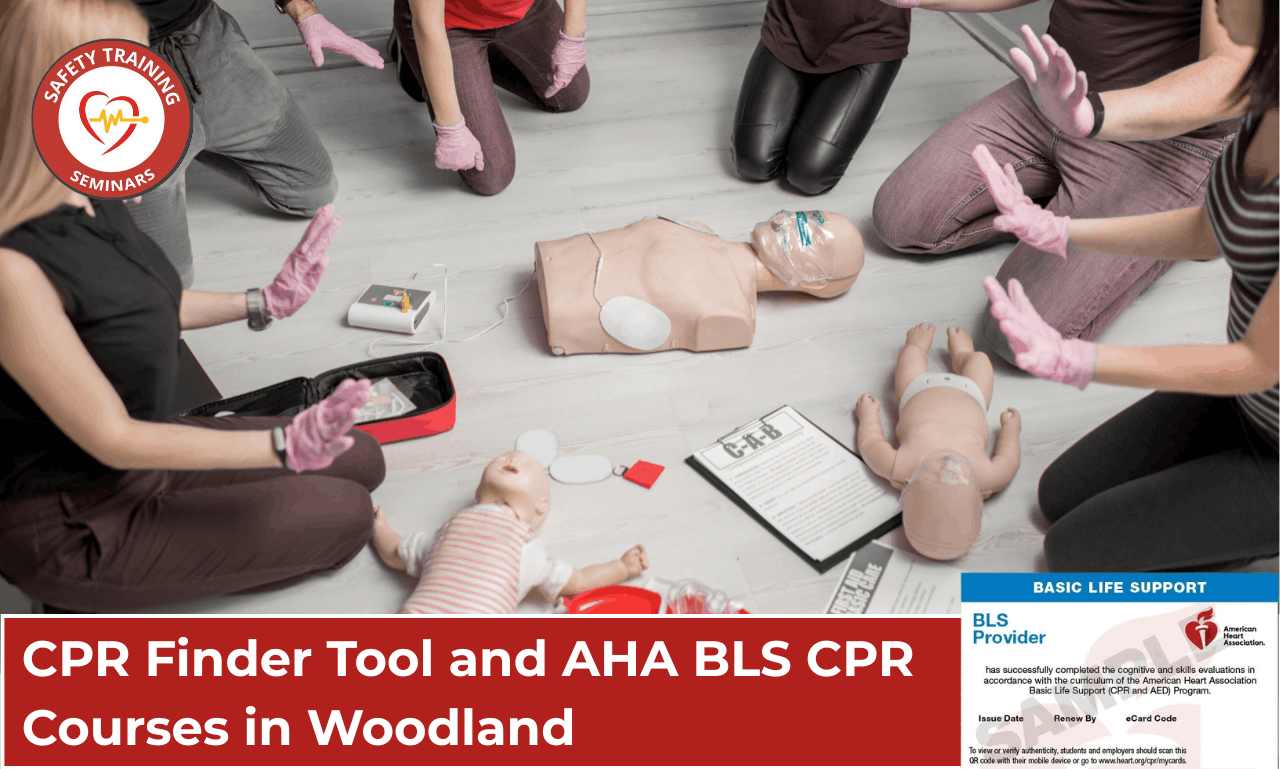
A BLS CPR Certification Course focuses on healthcare-level resuscitation skills such as high-quality CPR, AED use, ventilation, and coordinated response.
Examples of people who may encounter BLS requirements include nurses, nursing students, medical assistants, dental personnel, EMTs, and other patient-care professionals.
A Woodland business does not automatically need BLS simply because management wants employees trained in CPR. If employees are non-medical workplace responders, First Aid CPR AED may align more closely with their responsibilities. If documentation specifically says “BLS Provider,” however, the employee should choose the required BLS course rather than substituting a general CPR option.
ACLS and PALS Are Usually Not First-Line Workplace Certifications
ACLS and PALS serve advanced healthcare roles and generally should not be the first certifications selected for ordinary retail, agricultural, office, or other non-clinical workplace teams.
ACLS stands for Advanced Cardiovascular Life Support and focuses on advanced management of serious adult cardiovascular and cardiopulmonary emergencies. PALS, or Pediatric Advanced Life Support, focuses on serious emergencies involving infants and children.
These courses make sense when a healthcare professional’s clinical responsibilities require that level of preparation. They are not simply upgraded versions of workplace CPR training.
If an employee is both a healthcare professional and part of a workplace team, the requirement should be determined by that person’s professional role. Do not assume ACLS or PALS replaces a separate BLS credential if an employer requires both.
Build Workplace Training Around Actual Roles
A useful approach for a Woodland employer is to divide employees by what they may realistically be expected to do.
For example, general workplace responders may need First Aid CPR AED skills. An employee who also works in a healthcare capacity may need BLS. Specialized clinicians may have separate ACLS or PALS requirements.
This role-based approach also helps businesses avoid sending every employee through the same course without first determining whether it is appropriate.
Companies with employees traveling from the Sacramento side of the region can review CPR and life-support training near West Sacramento, while those west of Woodland can compare the Winters CPR, BLS, ACLS and PALS course information.
Local Training Through Safety Training Seminars in Woodland
Once the appropriate course has been identified, local access can simplify training for employees who live or work in Woodland and neighboring communities.
Safety Training Seminars provides CPR, First Aid, BLS, ACLS, PALS, and related training options at 725 Main Street, Suite 227, Woodland, CA 95695. The Woodland location is also listed on the current Safety Training Seminars website.
For a downtown small business, agricultural-processing company, healthcare employee, or individual learner, the practical step is the same: determine the required credential before registering.
Employers should compare course content with their workplace risk assessment and any applicable requirements. Individual learners completing training for employment, school, or licensing should use the exact course name provided by the organization requesting the credential.
Frequently Asked Questions
Should a Woodland agricultural-processing employee take BLS or First Aid CPR AED?
For a non-healthcare employee, First Aid CPR AED may be the more relevant starting option because it covers both first-aid response and CPR/AED skills. BLS is primarily aimed at healthcare professionals and trained responders. Employers should assess workplace hazards and confirm any regulatory or company-specific requirements before selecting training.
Does every Woodland small business need BLS-certified employees?
No. BLS is not automatically the appropriate course for every business. A retail store, office, restaurant, or other non-medical workplace may be better matched with workplace First Aid CPR AED training. Requirements can vary, so employers should review their workplace circumstances and applicable safety obligations.
What if one of our employees already works in healthcare?
That employee may have a separate BLS, ACLS, or PALS requirement connected to the healthcare role. Their professional credential should not automatically determine what the rest of a non-healthcare workplace needs. Evaluate workplace training and professional certification requirements separately.
Should Woodland employers train employees in both CPR and first aid?
For many non-healthcare workplaces, combining CPR/AED and first-aid preparation can provide broader emergency-response coverage than CPR alone. The appropriate course should still be selected according to the workplace’s expected hazards, applicable regulations, and employer requirements.
Can employees from Davis, Winters, or West Sacramento take training in Woodland?
Employees from surrounding communities may consider the Woodland location when the course fits their certification needs. Before selecting a location, confirm whether the employee needs workplace First Aid CPR AED, BLS, or another credential and then review the appropriate course information.
Choose Training Based on the Job Employees Actually Perform
For most non-healthcare agricultural-processing crews and downtown Woodland small businesses, the first question should not be “Do we need BLS, ACLS, or PALS?” It should be “What emergencies are our employees expected to respond to, and what training does our workplace require?”
That often makes First Aid CPR AED a sensible starting point for general workplace responders, while BLS is more appropriate for healthcare roles. ACLS and PALS belong to more specialized clinical responsibilities.
Safety Training Seminars offers local training options in Woodland for both workplace and healthcare needs. After confirming the appropriate credential, review the Woodland course page for available course types, location information, and registration details that match your employees’ responsibilities.