Why Woodland Providers Look for This Course
Most people who search for EMSA childcare training in Woodland fall into one of these groups:
- They are applying for a Family Child Care Home license and need to meet the health and safety training requirement.
- They work at a Child Care Center that needs another qualified director or teacher on site.
- They are studying early childhood education and want training that employers in the field recognize.
Each situation has different requirements, so it helps to understand how California structures the training before you register.
California’s Two-Part Childcare Health and Safety Training
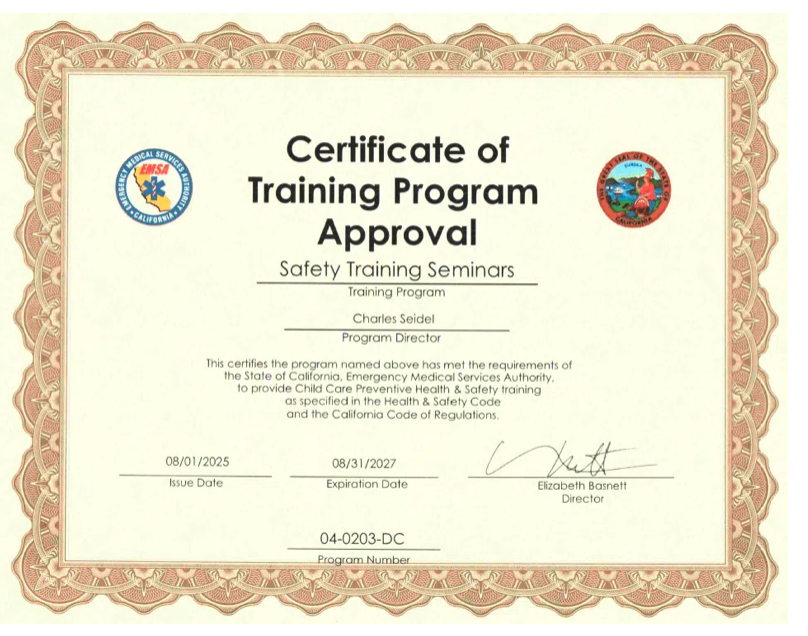
California Health and Safety Code Section 1596.866 ties health and safety training to childcare licensing. The California Department of Social Services enforces these rules through Community Care Licensing. At least one director or teacher at each Child Care Center, and each Family Child Care Home licensee who provides care, must complete both parts of the training:
Training component | What it covers |
Pediatric First Aid and CPR | Emergency response for infants and children |
Preventive Health Practices | Disease and injury prevention, nutrition, and lead poisoning prevention |
The California Emergency Medical Services Authority (EMSA) approves the programs that teach both components. According to EMSA, a complete Preventive Health and Safety course has a 7-hour preventive health component and a 1-hour nutrition component. Lead poisoning prevention instruction, based on the California Department of Public Health (CDPH) curriculum, has been required since July 1, 2020.
Your own requirement depends on your role, your facility type, when your license was issued, and your employer. This page is general information, not regulatory advice. Before you enroll, check with Community Care Licensing or your licensing analyst.
What Preventive Health Practices Looks Like in a Real Childcare Day
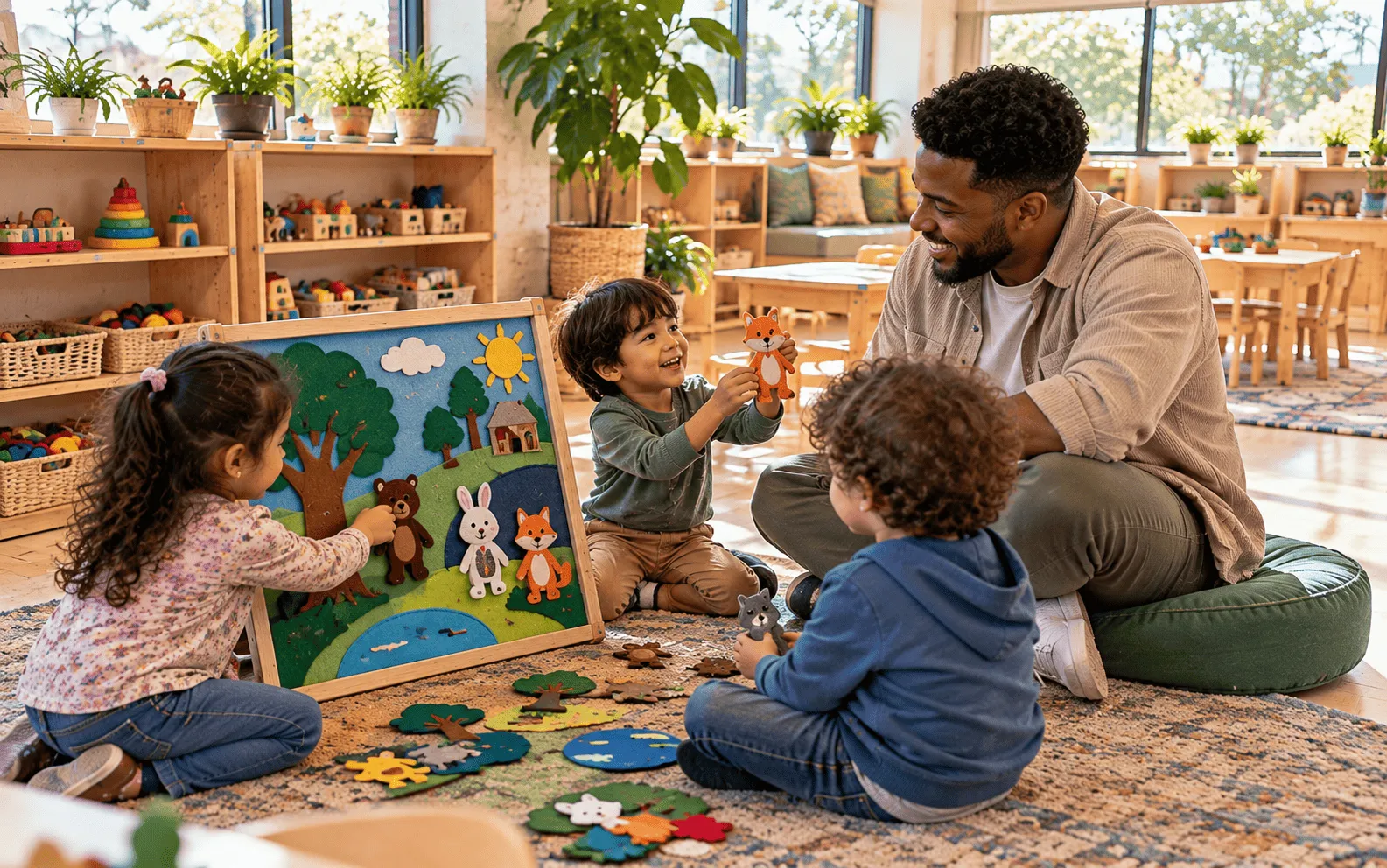
The course content lines up closely with the routines of a typical childcare day.
Morning arrival. A child comes in flushed and tired. Preventive Health Practices training covers how to recognize signs of illness, how infections spread in group care, why immunization records matter, and when to call a parent.
Diapering and toileting. Diapering and toileting areas are common places for germs to spread. The course covers step-by-step sanitation routines that keep diapering areas, toilets, and handwashing sinks from passing illness from one child to the next.
Snack and lunch. Kitchen counters, high-chair trays, and serving utensils need cleaning and sanitizing on a set schedule. Food safety and nutrition overlap here.
Outdoor play. Supervision and injury prevention take center stage outside. Air quality also matters in the Sacramento Valley, where wildfire smoke can affect children with asthma or other breathing conditions during some seasons.
Throughout the day. Childcare providers in California are mandated reporters, and the curriculum explains what that responsibility involves.
Nutrition Training for Childcare Providers
California requires at least one hour of childhood nutrition training within the Preventive Health Practices course for licenses issued on or after January 1, 2016. That hour must cover age-appropriate meal patterns based on the current Dietary Guidelines for Americans.
For a Woodland provider, nutrition training is useful in many day-to-day situations:
- Meal planning that fits toddlers’ and preschoolers’ needs without relying on processed snacks.
- Food allergies, including reading labels, preventing cross-contact, and following each child’s written plan.
- Specialized diets shaped by medical, religious, or cultural needs. This matters in Yolo County, where many families are bilingual or multigenerational.
- Diabetes, where meal timing and consistent communication with parents are especially important.
- Feeding and growth concerns, such as a child who refuses most foods or seems to be growing differently, which are worth raising gently with families.
- Dental health, which starts with limiting juice and sugary snacks.
Nutrition training also introduces the Child and Adult Care Food Program (CACFP), which can help eligible programs with meal costs.
Lead Poisoning Prevention: Why It’s Part of the Course
Children under six are especially vulnerable to lead. They often put hands and toys in their mouths, and their developing bodies absorb lead more easily. Even low levels can affect learning and behavior, and most children with elevated lead show no obvious symptoms.
Common sources include deteriorating paint in homes built before 1978, contaminated soil and dust, some imported toys and spices, certain pottery and cookware, and some traditional remedies. Like many established Sacramento Valley cities, Woodland has older homes. That is relevant for Family Child Care Homes operating in older houses and for providers whose families live in them.
The lead poisoning prevention module follows the CDPH Child Care Lead Poisoning Prevention Training Curriculum. Providers learn to recognize hazards, reduce children’s exposure, and encourage families to ask their child’s doctor about blood lead testing. For local public health information, families can contact Yolo County Health and Human Services.
Local Childcare Resources in Woodland
Several Woodland organizations support early childhood professionals, which makes the city a practical training base:
- Children’s Home Society of California runs the Resource & Referral program for Yolo County from its office on Main Street in Woodland. The program connects families with licensed childcare and supports providers.
- Woodland Community College, part of the Yuba Community College District on East Gibson Road, offers Early Childhood Education certificates and degrees. It has also partnered with Sacramento State to offer a Bachelor of Arts in Child Development completion program at the Woodland campus. ECE coursework and EMSA training serve different purposes, so students should confirm with Community Care Licensing how their credits apply.
- Woodland Memorial Hospital serves the community’s healthcare needs, which reflects Woodland’s role as a regional hub for the surrounding area.
Serving Woodland, Davis, and Surrounding Yolo County Communities
Woodland sits along Interstate 5 and Highway 113 in the Sacramento Valley, with State Route 16 heading west toward the Capay Valley. That road network links the city to much of rural and suburban Yolo County.
Childcare professionals from Woodland, Davis, Knights Landing, Esparto, Yolo, Zamora, and nearby Colusa County communities may consider the Woodland Training Center when looking for EMSA training near Woodland.
Taking the Course With Safety Training Seminars
Safety Training Seminars offers the EMSA Preventive Health and Safety Course at:
Safety Training Seminars Woodland Training Center
725 Main Street, Suite 227, Woodland, CA 95695
Many providers need both halves of California’s childcare health and safety training. Safety Training Seminars also offers Pediatric CPR and First Aid, so you can plan both courses with one provider. For current class dates and enrollment details, visit the Woodland EMSA Preventive Health and Safety registration page.
Ready to Train in Downtown Woodland?
Preventive Health Practices training gives providers practical skills for keeping children healthy, from clean diapering routines to balanced meals and lead-safe spaces. If you’re opening a home daycare in Yolo County, joining a Woodland preschool, or moving forward in early childhood education, EMSA Childcare Health & Safety Certification is a practical next step. Check what your license requires, then reserve a seat at the Woodland Training Center with Safety Training Seminars.